
Your garage door opener has power — but suddenly it is not listening.
The remote works one minute and stops the next. The wall button does nothing. The opener clicks, but the motor never starts. Or, more concerning, the door begins moving when nobody intentionally told it to.
When several strange electronic problems appear at the same time, the opener’s logic board may be failing.
For homeowners in Tyler and across East Texas, the difficult part is knowing whether the problem is actually inside the opener. A damaged wire, misaligned safety sensor, failing remote, electrical issue, or unbalanced garage door can produce many of the same symptoms.
Before replacing the circuit board — or the entire opener — work through the checks in this guide. They can help you rule out simpler problems and recognize when it is time to call a garage door professional.
A failing logic board usually shows up as several electronic problems at once: intermittent response, dead remotes, clicking without movement, phantom operation, or settings that will not hold. But wiring, sensors, remotes, power problems, and a heavy door can mimic all of those symptoms — so rule out the simple causes before paying for a new board or opener.
What the Logic Board Actually Does
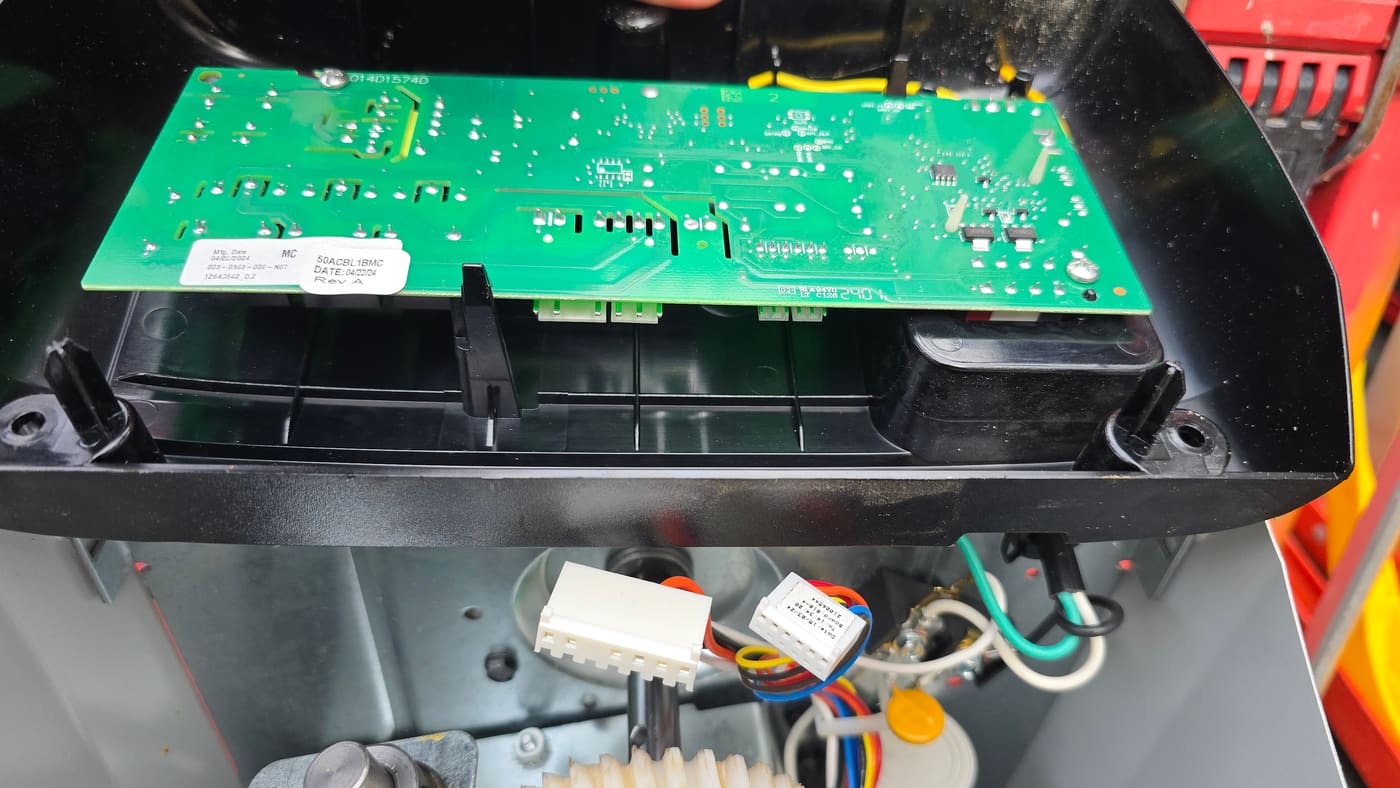
The logic board is the brain of your garage door opener.
It receives every signal — from your remotes, keypad, wall button, safety sensors, and any smart-home connection — decides what the door should do, and tells the motor when to run, how far to travel, and when to stop or reverse.
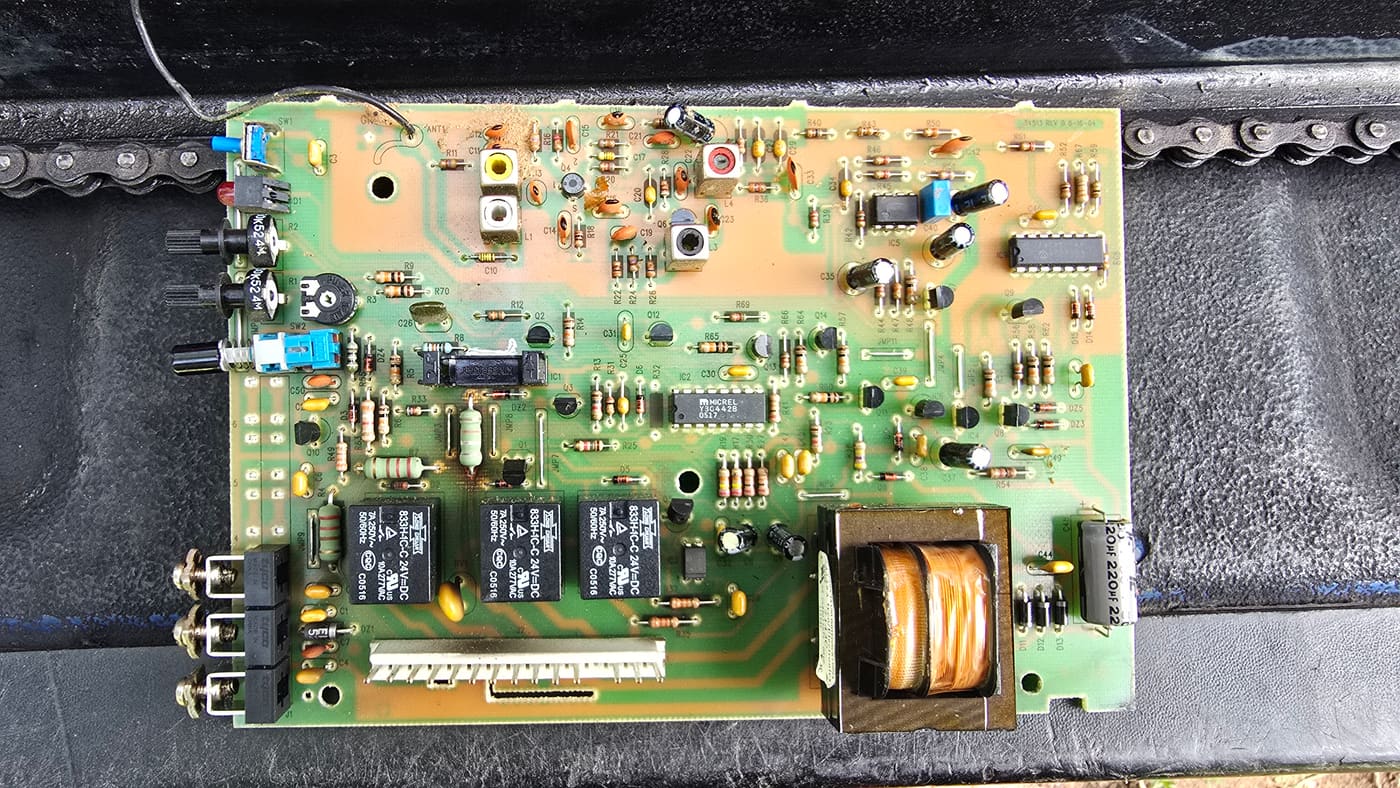
Because everything routes through the board, a failing board can produce almost any electronic symptom. That is exactly why it gets blamed too quickly. The same “possessed opener” behavior can come from:
- A pinched or damaged low-voltage wire to the wall button or sensors
- Safety sensors that are dirty, bumped, or wired loosely
- A worn remote or a stuck wall-button
- Radio interference — including from some LED light bulbs
- A power problem at the outlet, GFCI, or breaker
- A garage door that has become too heavy for the opener to move
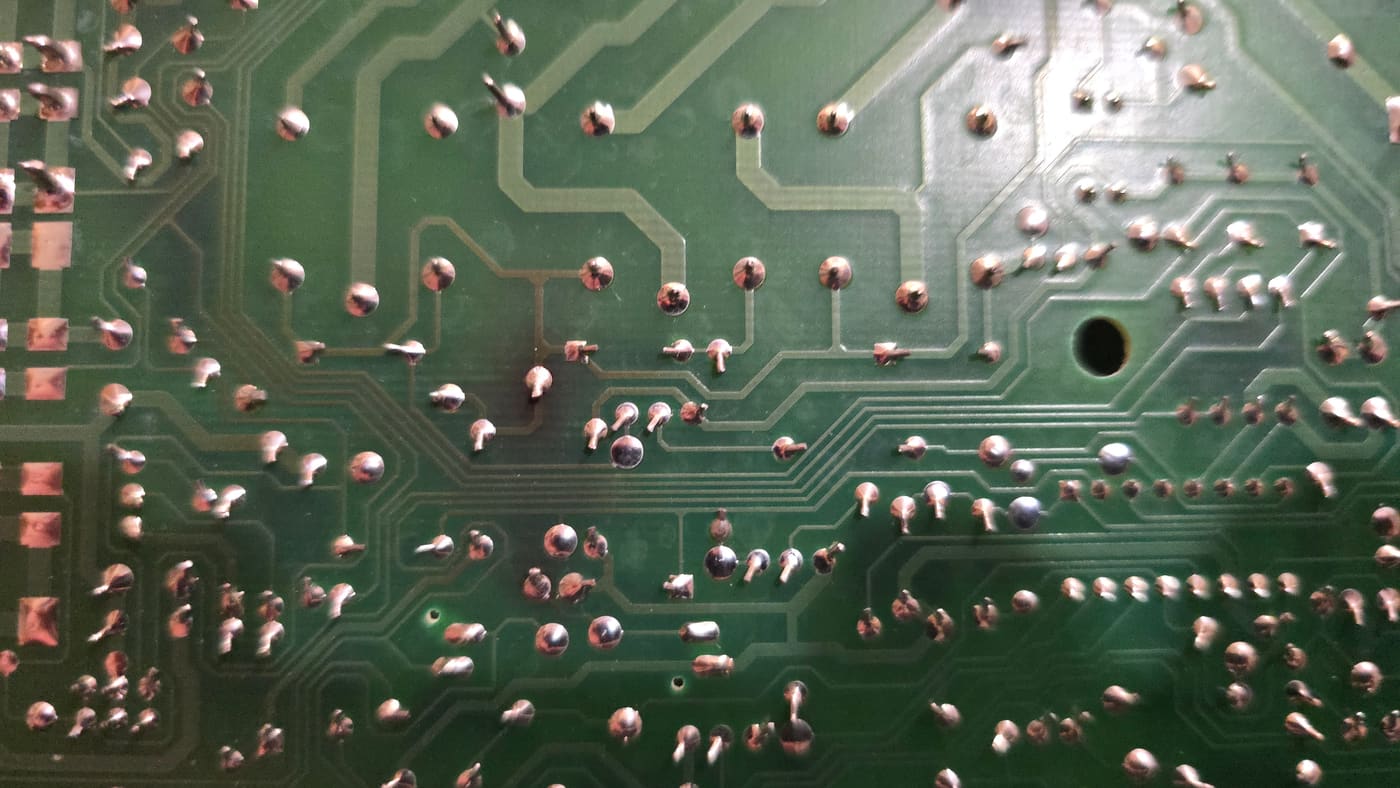
Boards do fail, though. Common causes include lightning and power surges, years of Texas attic-level heat in the garage, moisture, insects nesting inside the housing, and simple age.
Six Signs Your Logic Board May Be Failing
1. The opener responds intermittently
It works in the morning, ignores you in the afternoon, then works again at night. Intermittent electronic behavior with no pattern — especially across multiple controls — is one of the more telling logic-board symptoms.
2. Remotes and the keypad die, but the wall button works
The wall button is wired; remotes and keypads talk to the board’s radio receiver. When every wireless control stops at once and new batteries plus reprogramming do not help, the receiver side of the board is suspect. The reverse pattern — remotes work but the wall button does not — more often points to the button or its wiring.
3. The opener clicks, but the motor never starts
A click or hum with no movement can be a failing relay on the board — the switch that tells the motor to run. It can also be a stripped gear, a motor problem, or a door binding so hard the motor cannot move it. This symptom always deserves a full inspection rather than a guessed part.
4. The door operates on its own
“Phantom operation” — the door opening or closing with nobody touching a control — can come from a shorted wire, a stuck button, a neighbor’s device on an old-style frequency, or a board that is misreading signals.
A door that moves unexpectedly is a safety and security issue, not just an annoyance. Unplug the opener and disconnect it from the door with the emergency release until it is diagnosed.
5. The opener keeps losing its settings
Travel limits drift, the door stops short or slams, remotes “forget” their programming, or the clock and smart features reset on their own. Settings live on the board — a unit that cannot hold them is telling you something.
6. The diagnostic light flashes an error code
Most modern openers blink an LED in a pattern that maps to a specific fault. Count the flashes and check your owner’s manual — some codes point at sensors or wiring, others directly at the board. A code is a clue, not a conviction; brands differ, and one fault can trigger another.
Rule Out the Simple Stuff First
Most “bad logic board” calls turn out to be something cheaper. Work through this list before buying parts:
10-minute homeowner checks:
- Plug a lamp into the opener’s ceiling outlet — confirm the outlet itself has power
- Reset the garage GFCI outlet and check the breaker panel
- Put fresh batteries in a remote and try reprogramming it
- Check the safety sensors: lenses clean, lights steady, brackets aligned, wires intact
- Look along the low-voltage wires for staples, pinches, or chew marks
- Swap any recently added LED bulbs in or near the opener — some cause radio interference
- Pull the emergency release and lift the door by hand — it should feel light and stay put halfway
That last check matters more than most people expect. A door with worn springs gets heavy, and a heavy door overworks the opener until something gives. If your door is hard to lift, read our guide to torsion springs and door balance — fixing the door may save the opener.
Do not probe, unplug, or swap components on the circuit board with the opener powered, and never bypass the safety sensors to force the door closed. Openers store energy and control a door that can weigh well over a hundred pounds.
Garage Door Logic Board Repair in Tyler and East Texas
A garage door opener that stops responding does not automatically need a new logic board.
The same symptoms can be caused by damaged wiring, remote interference, safety-sensor problems, a failing motor component, or a garage door that has become too heavy for the opener.
A complete opener inspection should include:
What a proper diagnosis covers:
- The power supply
- Wall controls and low-voltage wiring
- Remotes and keypads
- Safety sensors
- Diagnostic lights or error codes
- Door balance and mechanical resistance
- Motor and drive components
- The logic board
Whether you are in Tyler or another community in the East Texas service area, the goal should be the same: identify what failed before replacing expensive parts.
A trustworthy garage door company should explain whether the logic board is actually the problem, what caused the failure, and whether repairing the existing opener makes sense. That is the standard we hold ourselves to on every garage door repair call in Tyler.
Should You Repair the Logic Board or Replace the Opener?
This is often the most important question for homeowners in Tyler and East Texas.
A new logic board may cost less than a complete opener, but replacing one electronic component does not make the rest of an aging opener new.
The right decision depends on the condition of the motor, drive system, sensors, controls, garage door, and available replacement parts — not just the age of the unit.
| A new board may make sense when… | A new opener may make more sense when… |
|---|---|
| The opener is relatively new and otherwise healthy | The unit is well into its second decade of service |
| Diagnosis shows the board is the only failed component | The motor, gears, or receiver are failing along with the board |
| The correct replacement board is available at a reasonable price | The board is discontinued or costs nearly as much as a new opener |
| The cause of the failure is known and fixed — like adding surge protection | Electronic problems keep coming back |
| The door itself is balanced and in good condition | You want battery backup, quieter operation, smart control, or better security anyway |
If the numbers point toward a new unit, our guide on repairing vs. replacing an old garage door opener walks through that decision in detail.
The Bottom Line
A logic board can absolutely fail — surges, heat, age, and moisture all take a toll — and when it does, the opener acts possessed: intermittent response, dead remotes, clicks without movement, phantom operation, lost settings.
But every one of those symptoms has cheaper look-alikes. Check the power, remotes, sensors, wiring, and door balance first, and insist on a diagnosis that names the failed part before anyone sells you a board or a new opener.
Opener acting unpredictably? Call (903) 245-1182 and we will inspect the complete system — power, controls, sensors, door balance, motor, and board — and tell you plainly what failed.
Frequently Asked Questions
-
Who repairs garage door logic boards in Tyler and East Texas?
Garage door companies that service automatic openers may be able to diagnose and replace logic boards. Before scheduling service, ask whether the company works on your opener’s make and model and whether the correct replacement board is available.
-
Do you provide garage door opener repair outside Tyler?
StraightShot Overhead provides garage door opener troubleshooting and repair in Tyler and throughout our East Texas service area, including Whitehouse, Lindale, Bullard, Chandler, Jacksonville, Kilgore, Henderson, and Longview. See our full service area, or contact us to confirm availability at your address.
-
Can you tell over the phone whether my logic board is bad?
Usually not with certainty. Your symptoms may help narrow down the possibilities, but several wiring, sensor, motor, remote, and mechanical problems can resemble a failed board. An on-site inspection is often needed before recommending a replacement.
-
What causes a garage door opener logic board to fail?
The most common causes are power surges and lightning-related electrical events, followed by heat, age, moisture, and occasionally insects nesting inside the opener housing. East Texas storms and hot garages are hard on opener electronics, which is why surge protection and a shaded, ventilated mounting location help boards last longer.
-
Is it worth replacing the logic board on an old opener?
Sometimes. If the opener is otherwise healthy and the correct board is affordable and available, a board swap can buy years of service. But when the motor and drive are also worn, parts are discontinued, or you would benefit from battery backup and modern security, putting that money toward a new opener usually makes more sense. A proper diagnosis first tells you which situation you are in.